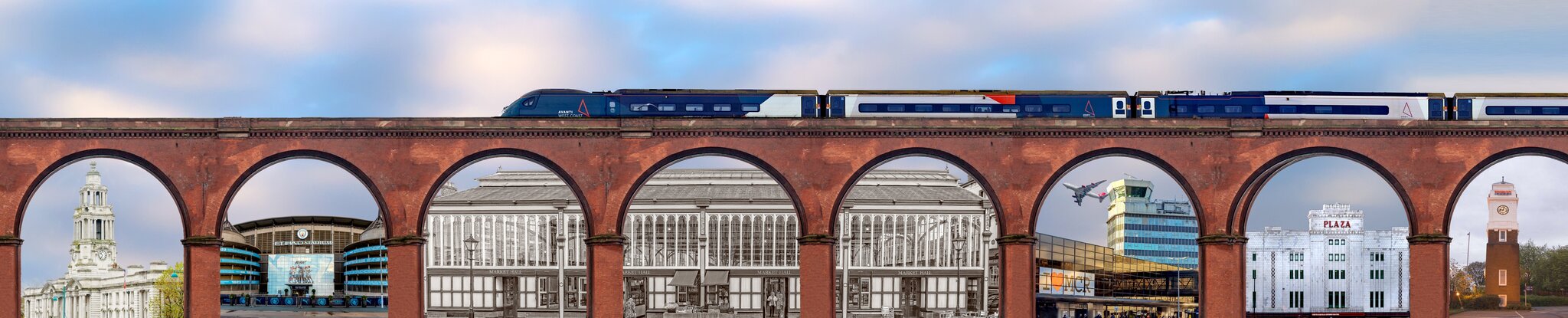

Weekday Wander - North by Northeast Quarter
Meet in the pub - Unicorn on Church Street for 11:00am
 As the Unicorn opens at 10:00am, there will be no standing outside until the door opens [unless you arrive very early], so drift in whenever you are ready. The Unicorn has a historic listed interior, and the outside is pretty outstanding as well with its red brick and sandstone construction augmented by selective glazed tiling. There are multiple rooms inside, so if you don't find us propping up the bar you will have to search the back rooms. Being close to the Northern Quarter, with all its trendy bars and cafés, the Unicorn is often overlooked by drinkers. It is not a multi-ale pub, serving only two, but one of those is the much improved and now sought out Bass.
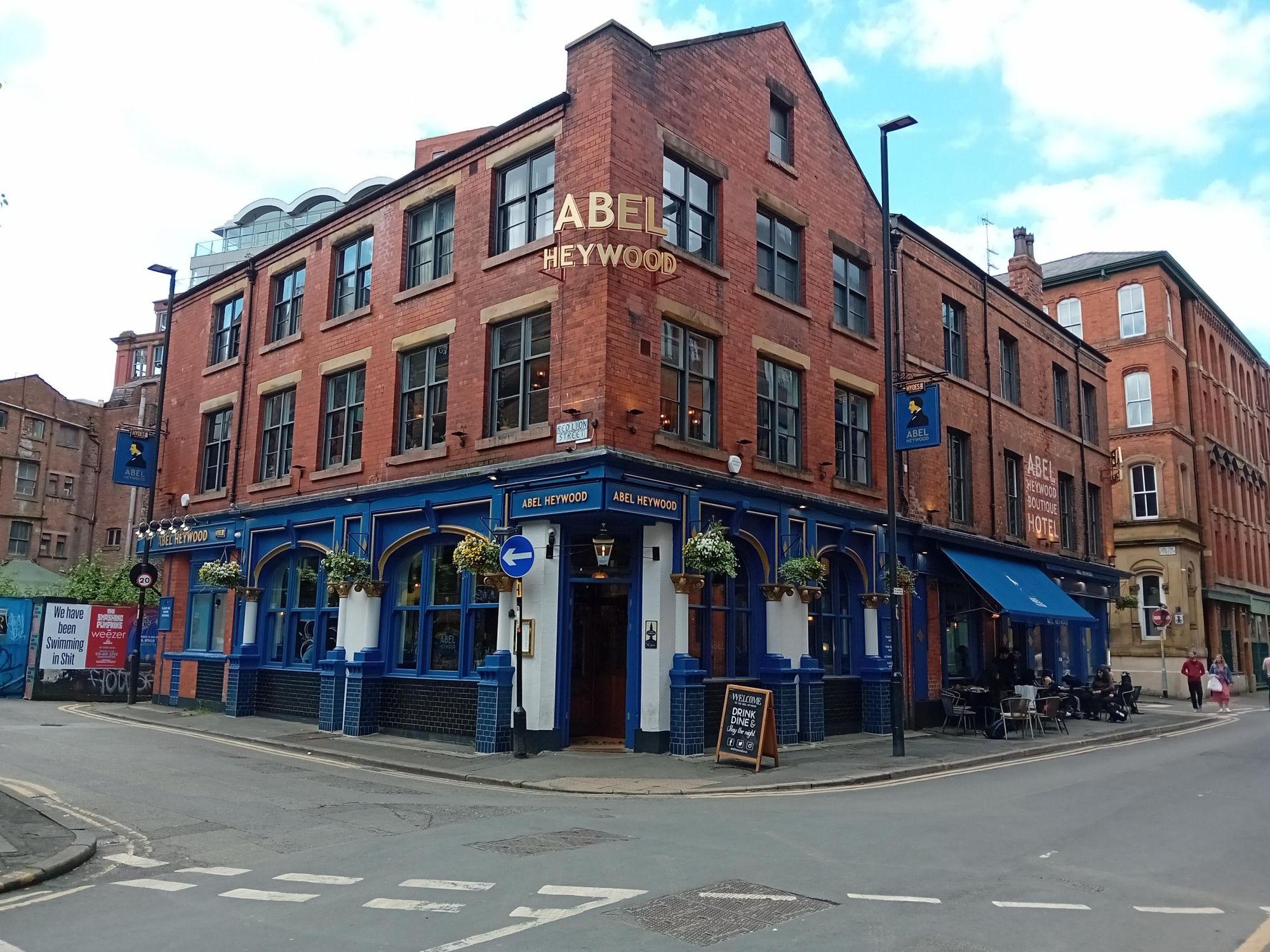
 We now travers a few more of the original industrial streets of the Northern Quarter, passing the old Smithfield market where you could get wholesale fruit & veg, fish, meat, and flowers - I wonder if this is why so many pubs around here open early, a left over from serving the barrow boys coming out of work at 8am?
Now we come down a bit in ambiance, but still Grade II-listed, when we enter (via the back door?) the Hare & Hounds on Shudehill [all one word please!]. The building dates back to around 1800, but this incarnation is from a remodelling about 1925, and includes that very Mancunian feature - a drinking corridor. After the upmarket feel to the previous two establishments, you are now squarely in the realm of the working man. Though not owned by them, the Hare & Hounds has sold Holts Bitter for innumerable years, possibly from before they sold to the free trade! Some say that it is even better than that offered in Holt's nearby acquisition, the Lower Turks Head. Not only does the inside merit its Grade ii listing but, as we exit to the front, pause, look over your shoulder and cast your eyes upon the wonderful glazed tile façade.
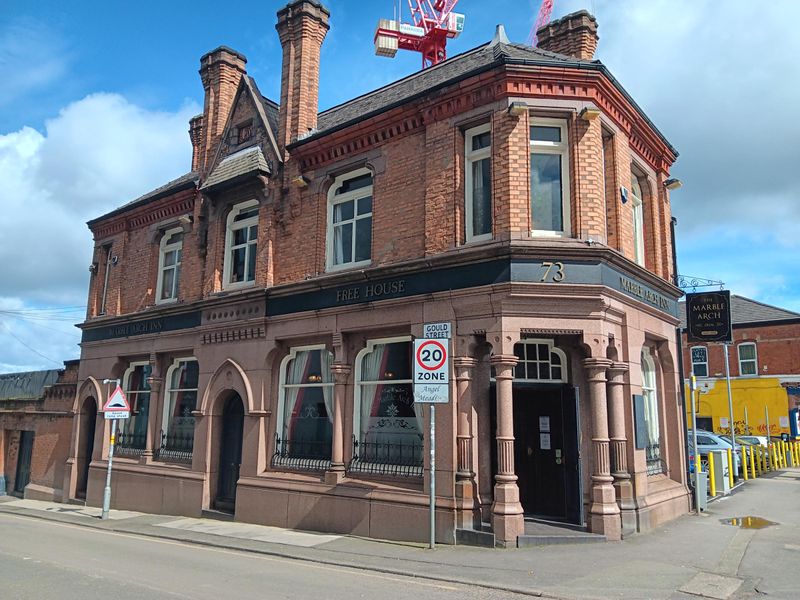
 We traverse a hundred yards or so up Rochdale Road to reach the Marble Arch. You probably didn't feel it, but we have left Manchester and are now in Collyhurst, a district which has a history going back many years, being recorded in the Doomsday Book and with possible Roman connections. In its day, Collyhurst was a thriving quarrying district, were that characteristic red Collyhurst Sandstone was extracted for use on many prestigious Mancunian buildings such as the Cathedral. Getting back to why we are here, the Marble Arch was the original location of (surprise surprise) the Marble Brewery and four of their ales should be on sale, along with a couple of guests. The building is Grade II listed. Built in 1888 for McKenna's Brewery it was pioneering, having had electric lighting installed from the start. The name is, however, a bit of a con - the 'marble' used on the front entrance is, in fact, Shap Granite. Don't worry if you feel a bit unsteady when you walk in, Yes the floor does slope towards the bar. Before we leave, we must mention the municipal gas works (photo right) which towered over Gould Street (street side of Marble Arch) and maybe makes the proposed apartment block seem not so bad!
 As we navigate our way towards our next outlet, we should pause to take note of another lost industries. To keep track of olde worlde Manchester use this side by side old and new maps link. When turning in to Bengal Street from Oldham Road take a look across the road and espy the location of Manchester's second railway station. The Manchester and Leeds opened what became their Oldham Road station in 1839, nine years after the Liverpool and Manchester opened Liverpool Road Station. The next station to open, in 1841, was what eventually became Piccadilly. The Leeds and Manchester chose this site, as the slope down in to Victoria was too steep for engines of that time to get up without assistance. Originally train in to and out of Victoria were thus rope hauled - but such was the rapid improvements in steam engines this only happened for a couple of years before abandonment.
Now, back to the beer
Our next destination

 is the recently re-opened by Holts Spinner's Rest, formally the Shamrock. It was a keg only pub owned by Marstons [nee Burtonwood (left), nee Wilsons (right)] who closed it in 2018. Purchased by Holts, who have have spent a few bob on renovating it, then reopened June 2026. Now that the local area of Ancoats is up and coming, and possibly getting a little from being almost Northern Quarter, so far it is working well. Food is available most of the day (stops at 8pm so we are in time). There are six handpulls, in two banks, but due to duplicates there is only a choice of four beers, however... When ordering Holts Bitter, don't forget to specify "Metal" or "Wood", because one handpull is served from a wooden barrel!
As we leave, cast your eyes upon the imposing victorian edifice opposite - Victoria Square. We think of social housing as being a recent invention - no, this was built in 1894 and was Manchester's first-ever council housing scheme. [And to this day it still offers sheltered apartments to the elderly.] A little like Angel Meadows, this area was plagued by shoddily built back to back housing, so the council bulldozed the area and built not only Victoria Square, but several terraced streets beyond which had the, for then, absolute luxury of an inside sink with running water (cold) and a 'personal' toilet [in the back yard]. To celebrate this, one street was named Sanitary Street. When the area was gentrified this was changed to Anita Street by painting out a few letters (a little like Canal Street is always suffering from to date!)
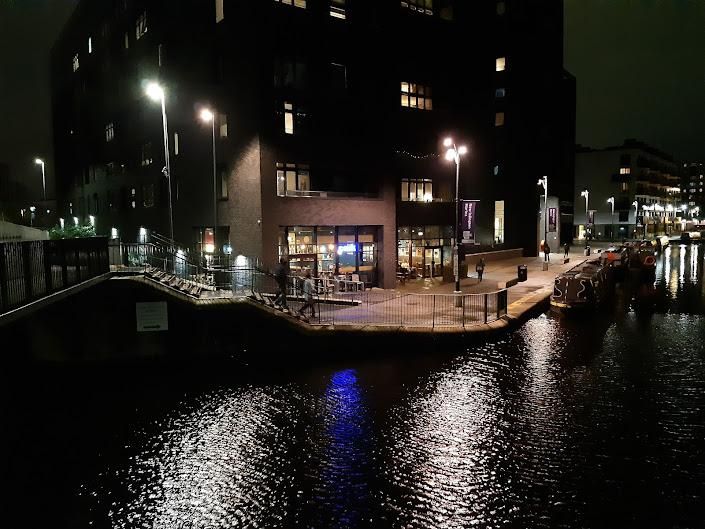
 Walking along Bengal Street towards our final destination will take us through the heart of the Murray Mills complex. The first mill, surprisingly called Old Mill, was begun in 1797, this is on our right when we meet the canal. This was rapidly followed by Decker Mill in 1802, New Mill in 1804, both Doubling Mill and Fireproof Mill in 1842, Wing Mill mid 18th Century, New Little Mill in 1908 and Wing Mill in 2019. Yes that's right, 2019. As part of the regeneration and conversion to apartments a new 'mill' (block of flats) was built to replace the original Wing Mill which was destroyed by fire in the 1950s. The architect tried to mimic the bold-brutal brick visage of the original mills by making the steel heart of the building predominant - see if you can spot it. The mills really benefited by the nearby Rochdale Canal, to the extent that an arm was run in to the middle of the mills to make unloading goods easier and safer from theft as can be seen on this historic Google Street View.
Travel back to the centre of Manchester can be accomplished by several routes, depending upon whether heading for Piccadilly Station or Piccadilly Gardens.
| Arrive | Leave | Pub | Address | Food |
| 11:00am | 11:30am | Unicorn | 26 Church Street, Manchester, M4 1PN | |
| 11:30am | 12:15pm | Abel Heywood | 38 Turner Street, Northern Quarter, Manchester, M4 1DZ | FOOD |
| 12:15pm | 1:10pm | Hare & Hounds | 46 Shudehill, Manchester, M4 4AA | |
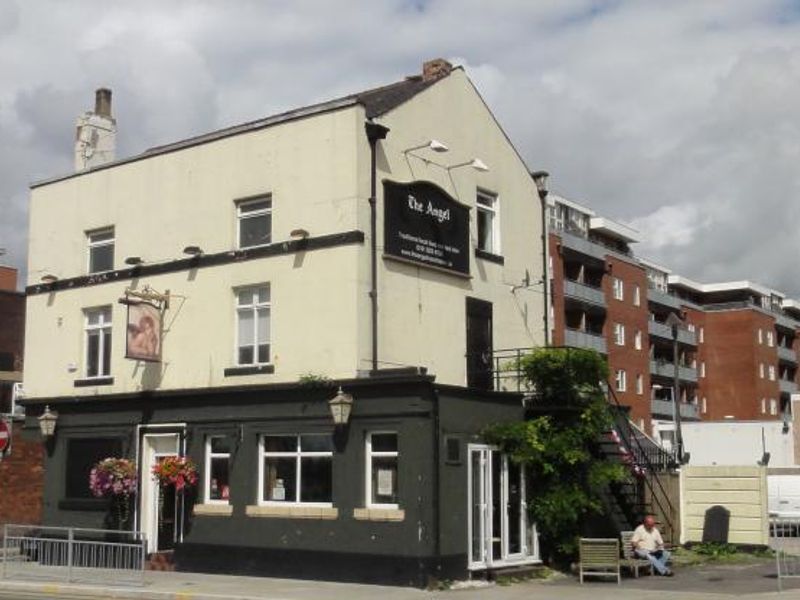
| 1:15pm | 2:10pm | Angel | 6 Angel Street, Manchester, M4 4BQ | |
| 2:15pm | 3:10pm | Marble Arch | 73 Rochdale Road, Collyhurst, Manchester, M4 4HY | FOOD |
| 3:20pm | 4:15pm | Spinner's Rest | 17 Bengal Street, Ancoats, M4 6AQ | FOOD |
| 4:15pm | 4:30pm | Short walk through the historic industrial heart of Ancoats | ||
| 4:30pm | 5:30pm | Cask | 2 New Union St, Cotton Field Wharf, Ancoats, Manchester, M4 6FQ | |